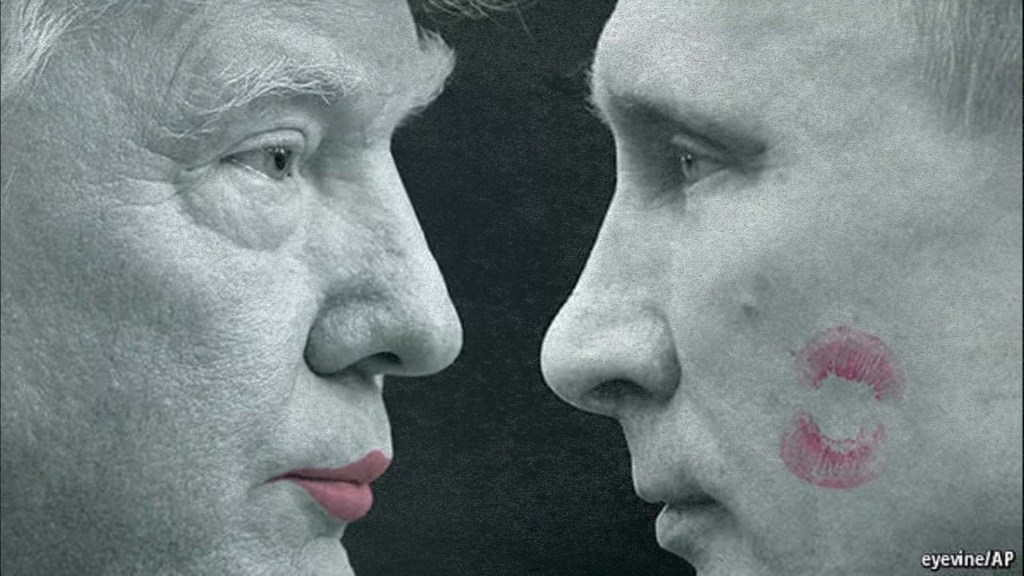
After Donald Trump and JD Vance’s embarrassing outburst at Ukrainian President Zelenskyy in the White House last week, the potential for peace, which once seemed within reach, was jettisoned into the distant future.
Trump doubled on his way to another weekend trip in Florida, stating that if Zelenskyy wanted peace, he was the one who needed to change. As expected, Speaker of the House Johnson, Senator Lindsey Graham, and other vocal Republicans defended Trump’s actions while criticizing the ambushed Ukrainian President.
The immediate fallout from Friday’s spectacle was Zelenskyy leaving the United States without a signed mineral rights deal—a deal Trump had been aggressively pushing for. However, the long-term impact was even more significant. As we outlined in our coverage last week, America’s influence on Ukraine’s future is far greater than most other countries’.
As the days passed, Trump and his administration continued to make bold claims against Ukraine, with more Republicans rallying behind him. Even mainstream media coverage has framed the incident as a “shouting match,” implying equal blame for the debacle.
But Friday was just the beginning. Trump has clearly decided to leverage the incident to justify actions he was already planning.
On Monday, Trump paused U.S. military aid to Ukraine while pressuring Zelenskyy—but not Putin—to find a quick resolution to the war. He cited “insufficient gratitude” for the $180 billion in military aid the U.S. had provided, most of which predated Trump’s presidency.
When Zelenskyy pointed out that the U.S. position and the U.N.’s failure to hold Russia accountable made near term peace unlikely, Trump grew more agitated. He even claimed, “this guy doesn’t want peace as long as he has America’s backing,” despite Trump’s apparent willingness to withdraw that backing.
Meanwhile, Trump instructed his staff to draft a plan for easing sanctions on Russia, aiming to strengthen U.S.-Russia ties. This included the White House asking the State and Treasury departments to draft a list of sanctions that could be eased for discussion with Russian representatives in just the coming days.
The word ambushed, which I used earlier, appears to be the accurate descriptor here. Trump’s admiration for Russia—and specifically for Putin—has clouded his ability to collaborate with Ukraine and Europe. Making it hard to believe Friday’s events were mere coincidence.
Thankfully, Europe has nearly unanimously rallied behind Ukraine. EU foreign policy chief Kaja Kallas declared, “Ukraine is Europe! We stand by Ukraine,” a sentiment echoed by leaders from the U.K., Germany, France, and others.
While the U.S. has halted aid to Ukraine, Europe has renewed its commitment, with some nations pledging even greater support. Additionally, European leaders are urging their countries to seize $218 billion in frozen Russian central bank assets held in Belgium. Believing these funds could bolster Ukraine’s defense and recovery efforts.
Despite Europe’s efforts to fill the void left by the U.S., the core issue remains unchanged.
Russia initiated this war, violating a peace agreement and invading Ukraine with the intent of redrawing borders. Zelenskyy was right to assert on Friday that without safeguards to punish Russia for such actions, Putin will simply repeat them.
During his 2024 campaign, Trump and his allies made bold guarantees. Trump claimed Kamala Harris’s incompetence “would get us into a World War III guaranteed,” and vowed to end Russia’s invasion of Ukraine within 24 hours or even before he took the oath of office.
Now, well past Trump’s first 24 hours in office, it seems he is fanning the flames of Russia’s aggression. Under his leadership, not Harris’, the U.S. edges closer to World War III, standing apart from Europe and Ukraine.
When Trump blindly follows Putin into World War III, most Republicans will ask, “Why did Zelenskyy let this happen?” But the real question should be, “Are we the bad guys?”
The answer is, indubitably, yes.
 Political Geekery
Leave a comment