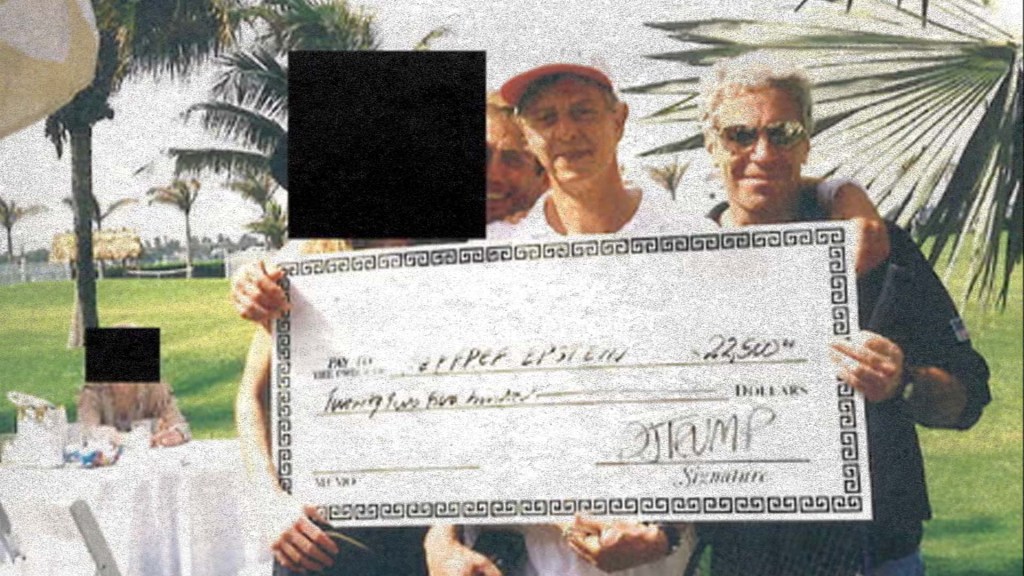
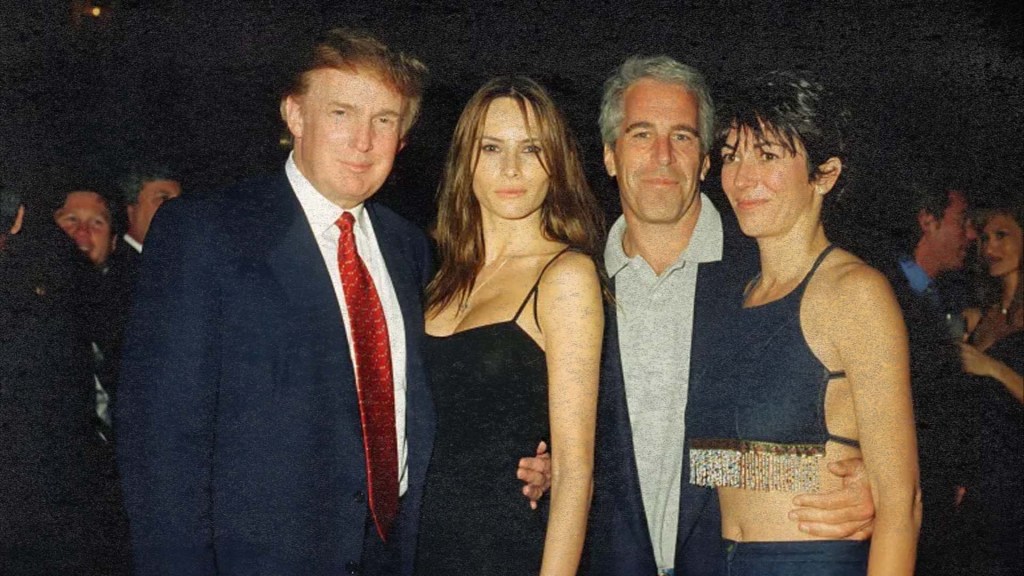
As Donald Trump’s corruption comes further out of the shadows and into the daylight, as his shift regarding the Epstein Files makes it abundantly clear that his name is on that list, and as lower income Republicans in the South have their Medicaid and other benefits ripped away from them, we’re seeing a handful of longstanding Republicans finally open their eyes.
Although they’re welcome to finally speak up, step out, and denounce their support for the tyranny being unleashed against us, I’ve started to notice a trend among these people who are just now pulling their heads out of the ground. When declaring their shock and awe, they all echo the same exact thing: “This isn’t your parents’ Republican Party. This isn’t Reagan’s political party.”
But here’s the thing: it 100% is. Don’t believe me? Let’s take a quick jaunt through history.
FLIPPING THE SOUTH
The political map looked incredibly different prior to 1964. Back then, Democrats could rely on the southeastern states that touch the Gulf of Mexico (Florida, Alabama, Mississippi, Louisiana, and Texas). In six of the nine presidential elections from 1932 to 1960, the Electoral College votes from all five states went to Democratic candidates. In the three elections they didn’t sweep, one was due to a Democrat-leaning independent taking three of the five (1948), and in the other two, where Republicans infiltrated the wall, Democrats still won three out of five and two out of five states in each of those.
This picture doesn’t even account for the reliability and blueness of Georgia, Arkansas, South Carolina, and other “Deep South” states during that time.
The southern, blue-collar voter leaned Democrat. And with good reason: Democrats ran on policies that benefited the lower and middle class. The lower and middle class south backed the party that was, and still is, pro-union, pro-benefits, and pro-regulation. But it wasn’t a change in policy that flipped the South red. It was one significant act.
Although white southerners like to say there’s no racism in the Southeast, history declares otherwise. Because when Lyndon B. Johnson signed the Civil Rights Act into law, he signed a death warrant for the Deep South’s commitment to his party. A once-reliable stretch of states for Democratic presidential candidates was gone. More importantly for this story, those voters felt disenfranchised and angry.
An anger one man was ready to fully exploit.
CHANGE THE CAMPAIGN
A frequent flyer in Republican primaries, and occasionally the general election, Richard Nixon couldn’t figure out why he couldn’t punch through and win. Was it his deceitful style? His unlikeable personality? Or something else? Nixon didn’t know. But after 1964, he saw something clearly: a large group of white voters in the South were angry and looking for an excuse to turn their backs on the party that declared others should be treated equal to them.
Nixon’s 1968 campaign is often noted by historians as differing significantly from previous campaigns run by both parties to that point. Although the Vietnam War was raging, Nixon and his team turned their focus to domestic matters, specifically social issues and race, something not commonly done at the time.
He often spoke of the “silent majority” and leaned into the idea of a decline in traditional values. By focusing on religion, family values, and law and order, he made this aforementioned group, who felt the civil rights movement was leading the country in the wrong direction, believe that most of America felt exactly the same. They felt they weren’t alone in thinking the entire country was worried about minorities taking jobs and committing crime. Everyone was just being silenced by Democrats and the liberal media.
But it was Nixon’s well-known “Southern Strategy”, playing on racial anxieties and resentment of civil rights advancements among white southern voters, that flipped the script in 1968. He campaigned on crime and, more importantly, implied that the rise in that crime was directly tied to the expansion of minority rights. He spoke the language southern white voters were eager to hear, making them feel disenfranchised no longer.
Nixon found resounding success with these new strategies, playing off voters’ fears (genuine or not), focusing on race and gender, and doing it all without saying the quiet part out loud. A group of voters who felt minorities gaining more would harm them now believed they were part of a silenced majority. And they were ready to act out on it.
These were new strategies, ones that have been employed by both parties to this day. Most notably, MAGA.
A CELEBRITY ENTERS THE CONVERSATION
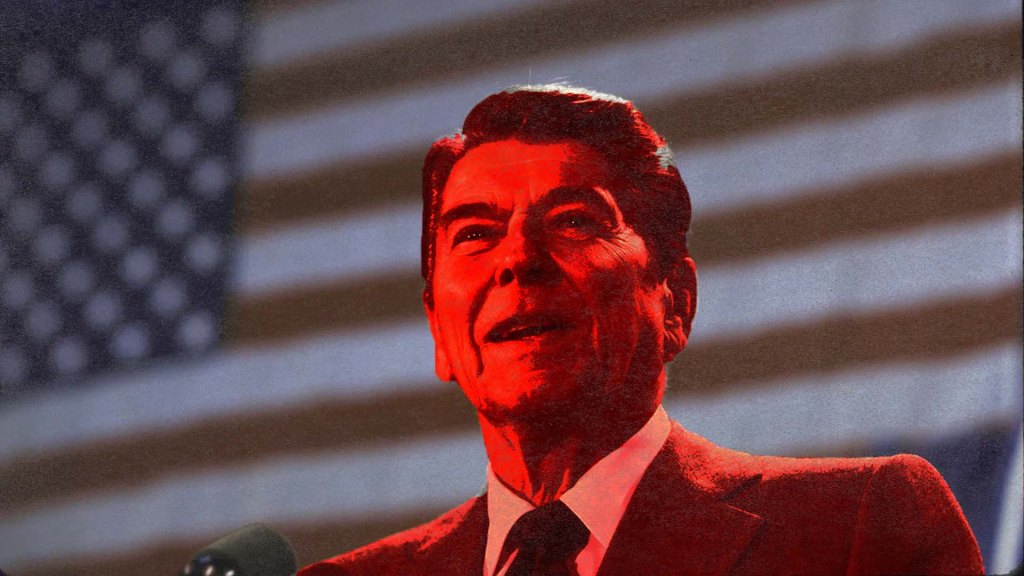
Before even running for office, Ronald Reagan made an impact on politics and the Republican Party. In 1964, the same year the Civil Rights Act was passed, Reagan gave a speech dubbed “A Time for Choosing” that sparked a new conservative movement. The speech focused on the need for a smaller federal government to reduce its control over people — a clear response to the Civil Rights Movement and a clear and direct statement on race from your parents’ favorite President.
This set him up to succeed sixteen years later, when he ran for president and mixed his Hollywood star power with his newfound conservative spotlight. Reagan demolished his Democratic opponent Jimmy Carter, winning forty-three states and over 50% of the popular vote. Reagan had made an impression, but his biggest impacts were still to come.
Reagan, a millionaire when taking office, saw an opportunity to secure his legacy with the most important people to him: other millionaires. He immediately championed and pushed through the Economic Recovery Tax Act of 1981, which heavily favored wealthy Americans by lowering their taxes from a long-standing 70% to just 50%. It also pushed the national deficit past $1 trillion for the first time ever, tripling it to a staggering $2.85 trillion during his presidency. But he went even further with the Tax Reform Act of 1986, which brought taxes on the wealthiest Americans down from the newly favorable 50% to just 28% by 1988.
Notably, Reagan, who entered office worth $10 million, left the presidency 50% richer while supposedly serving his country. But it wasn’t just Reagan who benefited. Millionaires spoke to the president and got what they wanted — more so than ever before. And that made this class of now lower-taxed Americans feel emboldened to flex their power with future presidents.
But it wasn’t just his two notorious acts that put the wealthy first. Reagan caused even more damage with his deregulation of capitalism, a series of legislation and additional acts passed with the promise of jump-starting the economy through, you guessed it, trickle-down economics and fewer rules to police corporations. This set forth a new direction for the free market in America, one that has seen CEO wages and product prices skyrocket while middle-class Americans continue to earn the same.
And I’m just getting started. It’s important to also note the dominoes that led to some of the most close-minded and impactful current Supreme Court Justices serving. Reagan’s vice president turned president, George H.W. Bush, nominated Clarence Thomas. Bush’s son later nominated John Roberts and Samuel Alito. Three like-minded individuals who have torn down rules and regulations to get what they and their allies want, including Trump.
MAGA IS REAGAN’S LEGACY
To this day, your Republican-voting parents still praise Ronald Reagan. Trickle-down economics looked fantastic to those building their homes and retirement plans in the early 1990s. Racism is much easier when those running the country are passing legislation to support it and you don’t have to say anything about it out loud.
So while the Tea Party movement, with help from the internet and Russia, helped create the building blocks of the MAGA echo chamber, what opened the door for both the Tea Party and MAGA was Richard Nixon and Ronald Reagan changing the political landscape forever.
Much of what Trump is doing mimics what we saw from Reagan way back in the ’80s. Sure, the main argument the people turning on Trump are trying to make is that while Reagan fought to shrink the federal role in governing, Trump is using big government to get what he wants. But both did so to improve their own positions, the position of the wealthy, and to push through longstanding and destructive policies that hurt many people, specifically minorities.
Additionally, Reagan’s closeted racism was evident in the very policies he pushed — much like what we see from the Trump administration today.
So while the person emerging from the MAGA cocoon wants to stand on the idea that the old Republican Party was different, the only real difference is the federal government’s role in taking from the poor to give to the rich. Everything else Trump is doing was either built by the Republicans who came before him or enabled by those same people spending decades and millions to tear down protections and oversight.
Yes, Trump’s Republican Party is, in fact, Reagan’s Republican Party.
Is there a lesson here? Maybe not. I know we’re supposed to be welcoming to these newly grounded individuals. But I really don’t think it matters in the end. The person angry with Trump for taking away their very means to live, the same person posting online about this not being Reagan’s party anymore, will not be the difference in 2026 or 2028. That’s because every Republican politician, even the ones with enough spine to speak up now and then, are enabling this assault on our Constitution. They either bend the knee and make it happen, like drawing racist new districts that silence thousands of voters in Texas at Trump’s command, or they do an interview saying what’s happening isn’t great, and then turn around and vote for the legislation Trump and his allies want in order to keep their seat in office.
These voters may be angry at Trump, but when they vote for Ken Paxton, Ted Cruz, Gabe Evans, Kyle Langford, and others with the “R” next to their name, they will further enable the tyranny that’s unfolding. And be honest with yourself: will the boomer who voted Republican for four straight decades change lanes in 2028? Will they pick the Democrat going up against Trump’s proxy? Or worse, the Democrat taking on Trump himself when he twists the Constitution and ends up running for a third term?
We all know the answers to those questions.
Next time someone says, “This isn’t Reagan’s Republican Party,” remember that it is. It’s more his party than Trump’s. In fact, you can let them know: Reagan walked so Trump could terrorize a nation.





 Political Geekery